




To keep your child motivated, gradually reinstate their sleep and meal routines, set clear and achievable goals with them, and pay close attention to their feelings about this change. Add to that slightly less screen time in the evening and a little more physical activity during the day, and you'll have covered the essentials. The practical guidelines that follow show you how to implement each of these strategies, day after day.
In short:
- Resuming a regular sleep and meal schedule two to three weeks before the start of the school year makes it easier for the child to adapt.
- Setting specific, concrete and time-bound goals promotes motivation and autonomy from the first week.
- Limiting recreational screen time to about two hours per day and gradually increasing bedtime improves concentration.
- Monitor for signs of anxiety or intimidation, and intervene quickly in cases of concerning behavior or persistent difficulties.
- Preparing the day before, establishing a short and predictable ritual, and practicing the route before the big day help to reduce stress on the morning of the first day back at school.
Table of contents
- Practical tips to apply before the start of the school year and in the first few weeks
- Sleep, physical activity and screen time management: concrete guidelines
- Set SMART goals and encourage autonomy
- Emotional support: recognizing anxiety and bullying, responding with kindness
- Practical checklist: the day before and the day of the event
- When to intensify support: signals and intervention steps
- Author's perspective and pedagogical stance
- Personalized support
- Sources
- F.A.Q
Practical tips to apply before the start of the school year and in the first few weeks
Getting things running again doesn't happen overnight. According to CHEOStarting to re-establish the routine several weeks before the start of the school year greatly facilitates the child's adaptation, who needs time to find their rhythm again.
Here's what you can put in place right now:
- Resume your sleep and meal schedule two to three weeks before the big day, without waiting until the last weekend.
- Involve your child in the preparations: choosing supplies, decorating the planner, or creating a... visual calendar makes him an active participant in his return to work.
- Set up a pleasant, quiet and well-lit homework area, and establish a simple routine after school (snack, free play, then homework).
- Create more opportunities to meet up with friends before the start of the school year, even if it's just a trip to the park.
A child who has already seen a classmate before the first day usually arrives at school more relaxed, because he knows that a familiar face is waiting for him.
Pro tip: Create a visual calendar of the last two weeks of vacation where each day approaching the start of term is ticked off, together, like a positive countdown rather than a threat.
To delve deeper into daily organization, see our article on the returning to school and a balanced school routine proposes other concrete solutions.
Sleep, physical activity and screen time management: concrete guidelines
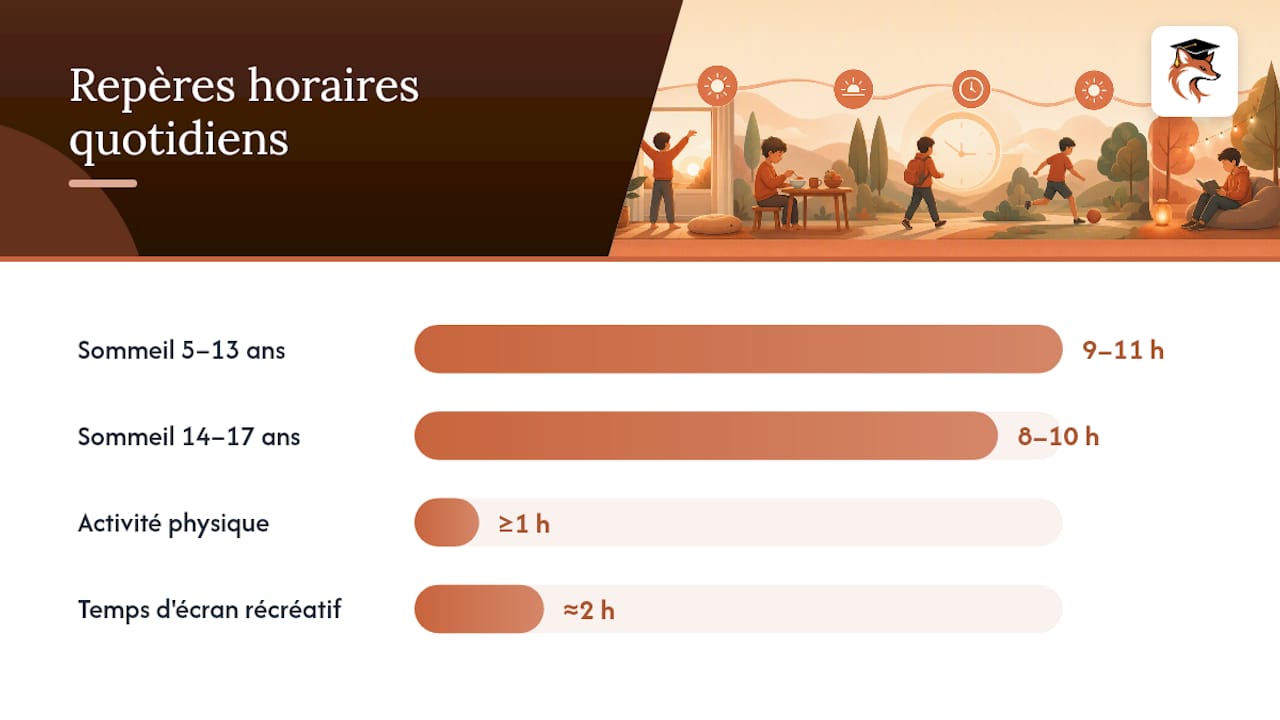
A tired child has much more difficulty concentrating and keeping a smile on their face when doing their homework. The Public Health Agency of Canada recommends 9 to 11 hours of sleep per night for children aged 5 to 13, and 8 to 10 hours for teenagers aged 14 to 17.
A significant proportion of children do not get enough sleep, a situation associated with increased irritability, stress, and difficulty concentrating, according to the same data. Lack of sleep directly impacts academic motivation, long before grades are affected.
Here are a few simple guidelines to follow:
- Aim for at least one hour of moderate to vigorous physical activity each day, according to official guidelines, and limit recreational screen time to about two hours.
- Move bedtime forward gradually, in increments of 15 to 30 minutes every two or three days, as suggested by CHEO, rather than imposing a big change the night before school starts.
Set SMART goals and encourage autonomy
A vague goal is discouraging. A precise, achievable, and time-bound goal gives the child a sense of accomplishment that they can feel from the first week.
- Make the objective concrete : replace "work better" with "read for ten minutes every night before bed".
- Break down the large tasks : a research assignment becomes three small steps spread over three days, each ticked off on a visual calendar.
- Limit the choices : offer two options rather than an open decision, for example choosing between mathematics or reading first.
- Reward competence, not just the result : Emphasize the effort and strategy used, not just the grade obtained.
This gradual autonomy is built step by step, and our article on the development of school autonomy details other exercises to nourish her throughout the year.
Emotional support: recognizing anxiety and bullying, responding with kindness
Motivation isn't just about organization. An anxious or unhappy child at school doesn't learn in the best conditions, regardless of the quality of their routine.
Certain signs deserve your attention:
- Social isolation, unusual irritability, or sudden withdrawal after school hours.
- Drop in grades without clear explanation, or repeated refusal to go to school in the morning.
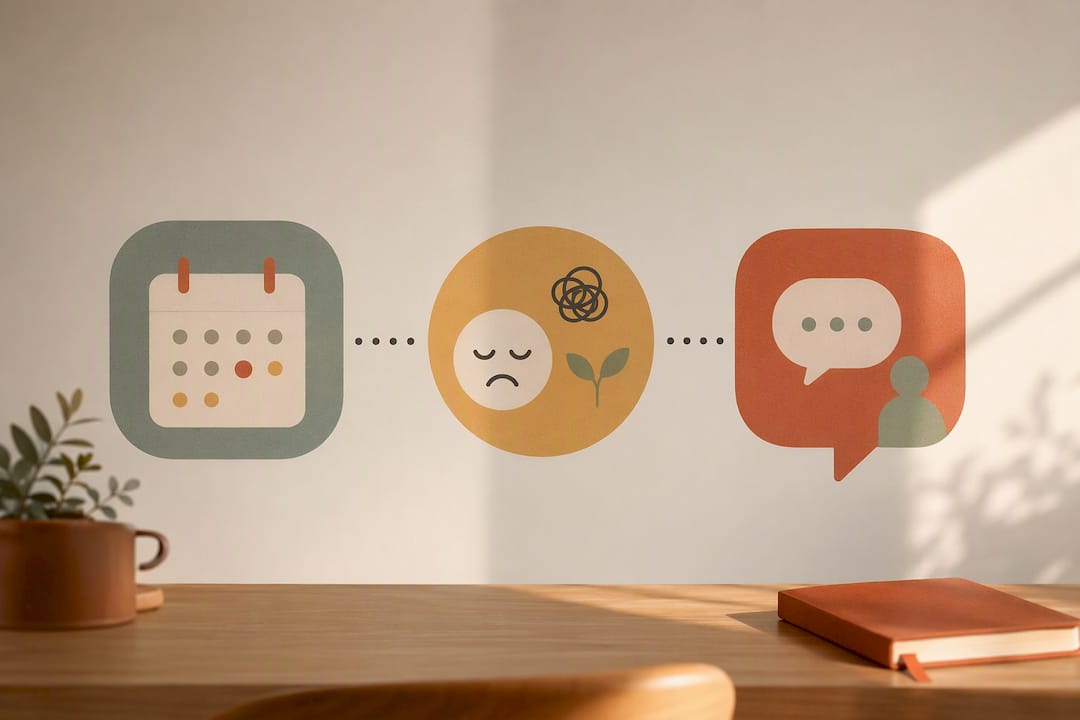
Faced with these signs, first validate what the child is feeling rather than minimizing it: "I see that it's difficult for you" opens more doors than "it's going to be okay". The Government of Quebec recommends, in case of signs of bullying, to contact the school team quickly, to document the events and to seek professional support if the situation persists.
Pro tip: Record the date and a short description each time concerning behavior occurs. This log will be a valuable tool if you need to discuss it with the teacher or a professional.
Our guide to the managing stress before exams It also addresses these strategies of emotional validation.
Practical checklist: the day before and the day of the event
CHEO offers a simple checklist to defuse morning stress:
- Prepare your bag, clothes and lunch the night before, to avoid the morning rush.
- Put the child to bed early and leave earlier on the same day, leaving some room for the unexpected.
- Practice the route once before the start of the school year if the school or route is new.
- Establish a short and predictable goodbye ritual, always the same.
- After school, ask open-ended questions like "What made you smile today?" rather than "Did you have a good day?"
When to intensify support: signals and intervention steps
If a sign of distress persists for more than two to four weeks, or if academic performance declines significantly, it's time to take further action. CHEO recommends contacting the teacher, the principal, the family doctor, or the school's psychosocial services department. Keep a simple record of observed behaviors: this will facilitate any communication with the school team or a healthcare professional.
Author's perspective and pedagogical stance
Each child reacts differently to the start of the school year, and no method works for everyone in the same way.
— Marie
Personalized support
Some children simply need a little more structure to regain confidence in math or French, especially after a long summer break. Individualized support with tutors can be tailored to each child's pace and specific needs.

In practical terms, here's what this can bring to your family:
- Personalized tutoring in French or mathematics, billed by the hour with no long-term commitment.
- Targeted preparation for secondary school entrance exams.
- Regular monitoring of progress is useful for detecting a drop in motivation early.
Our rates tutoring and homework help sessions are accessible online, and a free trial allows you to see if the approach is suitable for your child before any commitment.
Sources
For further information: CHEO, Public Health Agency of Canada, Government of Quebec and To be born and to grow up.
- Public Health Agency of Canada — Infographic on children's sleep
- CHEO — Tips for returning to school
- Government of Quebec — Intervening in cases of bullying at school
F.A.Q
How can I motivate my child to go to school?
Re-establish a stable sleep and meal routine a few weeks before school starts, and set small, achievable goals with your child rather than vague expectations. Involving your child in their own preparations, such as choosing school supplies, also strengthens their sense of control over the situation.
What are the things to do before the start of the school year?
Gradually move bedtime earlier, prepare school supplies together, practice the route to school, and schedule at least one meeting with a classmate before the big day. A visual countdown calendar to the start of the school year also helps to ease the anticipation.
How to reassure a child who doesn't want to go to school?
Start by validating his feelings rather than minimizing his fears, then work with him to identify what is specifically worrying him. If the refusal persists for more than two to four weeks, CHEO recommends contacting the school team or a healthcare professional for further assistance.
How can I help my child concentrate in class?
Sufficient sleep—9 to 11 hours for children aged 5 to 13, according to the Public Health Agency of Canada—remains one of the most direct factors influencing concentration. Daily physical activity and limited screen time in the evening complete this balance, which is essential for attentiveness in the classroom.