



Prioritize getting enough sleep each night, and limit the number of extracurricular activities. according to Consider your child's age and school workload, and establish a short weekly meeting to review progress. The rest is a matter of fine-tuning, which we detail below.
In short:
- Limit extracurricular activities to two per week to avoid mental overload that harms motivation and academic performance.
- Watch for signs of fatigue or loss of enjoyment in the child, such as irritability, sleep disturbances, or declining grades.
- Establish a structured evening routine with a break after school, homework in short blocks, and a fixed bedtime to improve recovery.
- Regularly assess the need to continue or stop an activity by setting a trial period of a few weeks to reduce pressure.
- Prioritize variety, sleep and recovery to promote harmonious development, leaving room for boredom and relaxation.
Table of contents
- Why extracurricular activities help, and when they become a problem
- Visible signs of overload: the checklist to monitor
- How to plan a realistic week balancing studies and leisure
- Homework routine and sleep: the evening protocol that changes everything
- Should we continue or discontinue an activity? The decision grid
- Adaptable timetable templates, from primary to secondary school
- What to do if your child is already overweight
- Concrete resources to regain balance
- Putting pleasure and recovery back at the center
- Need for a targeted boost rather than just another activity
- Sources
- F.A.Q
Why extracurricular activities help, and when they become a problem
A child who plays a sport or instrument develops their motivation, social skills, and sense of belonging. These positive effects are well-documented, provided the workload remains reasonableThe real issue is not the number of activities, but the nature of the relationship the child has with them.
A study ofUQAM Two forms of passion are distinguished among high school students. Harmonious passion coexists with other areas of life and supports academic success. Obsessive passion, on the other hand, invades all mental space and often results in a decline in performance and a general loss of motivation.
To distinguish between the two in your child, observe:
- Can he miss a training session without disproportionate anxiety?
- Does he speak about the activity with pleasure or with pressure?
- Are his grades improving or declining since he's been putting more effort into it?
Visible signs of overload: the checklist to monitor
An overloaded student doesn't always express it verbally. They show it through fatigue, irritability after school, or a drop in grades that appears within a few weeks. Loss of enjoyment in an activity they previously loved is often the most reliable sign, more revealing than a full timetable on paper.
Here are the signals to check:
- Difficulty falling asleep or frequent awakenings during the night
- Headaches, recurring stomach aches without a medical cause
- Grades declining in one or more subjects
- Sudden refusal to go to an activity he had previously requested
- Increased family conflicts over homework or transportation
Pro tip: Keep a small family journal for two weeks. Note bedtime, mood upon returning from school, and unfinished homework. Trends become apparent much faster than you might think.
The youth mental health resources They remind us that a prolonged imbalance between activity and recovery eventually affects sleep, mood and concentration in class, long before grades visibly collapse.
How to plan a realistic week balancing studies and leisure
Before cutting anything, assess what's really happening. Most families underestimate the time wasted on travel and screens, and overestimate the time actually spent on homework.
The benchmarks that work best for the majority of students:
- Sleep : between 7 and 8 hours per night, non-negotiable even during busy periods.
- Concentrated study : approximately 8 to 10 hours per week in secondary school, spread out rather than concentrated in a single evening.
- Physical activity and free leisure : at least a few fixed time slots, without screens, each week.
- Family time without a schedule : a protected block, even a short one, to decompress together.
To create this schedule, start by observing a typical week without making any changes. Then, identify the leaks: unproductive screen time, longer commutes, poorly managed transitions between school and homework. Finally, apply only one prioritization rule at a time, rather than ten small, simultaneous adjustments that cancel each other out.
Pro tip: If an activity takes more than three hours per week in travel, it is often the one that needs to be reviewed first, not homework.
Un weekly study plan Having a structured approach greatly facilitates this setup, especially during the first week, when everything seems unclear.
Homework routine and sleep: the evening protocol that changes everything
A simple protocol reduces most of the friction.
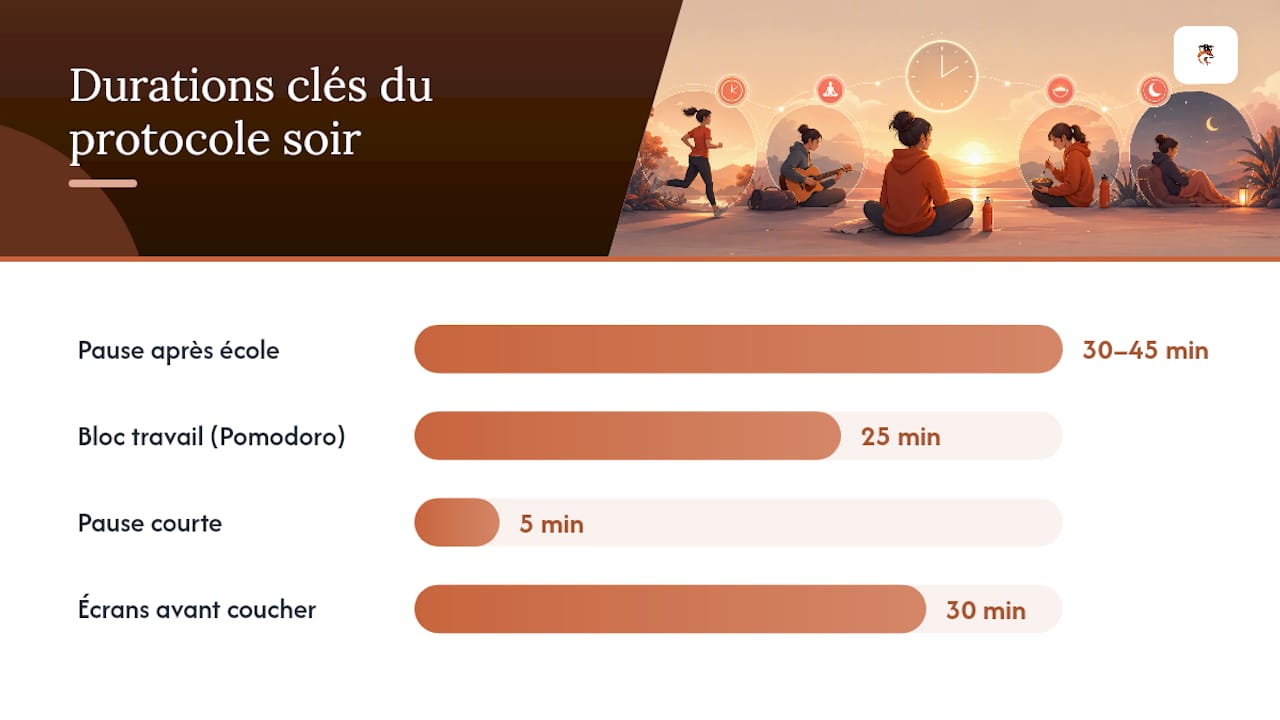
- Allow a real break of 30 to 45 minutes after school, without homework or pressure.
- Next, structure the homework into short blocks, Pomodoro style: 25 minutes of work, 5 minutes of break, without negotiating the duration during the effort.
- Turn off screens at least 30 minutes before bedtime, and set a stable bedtime, including on nights when you're active.
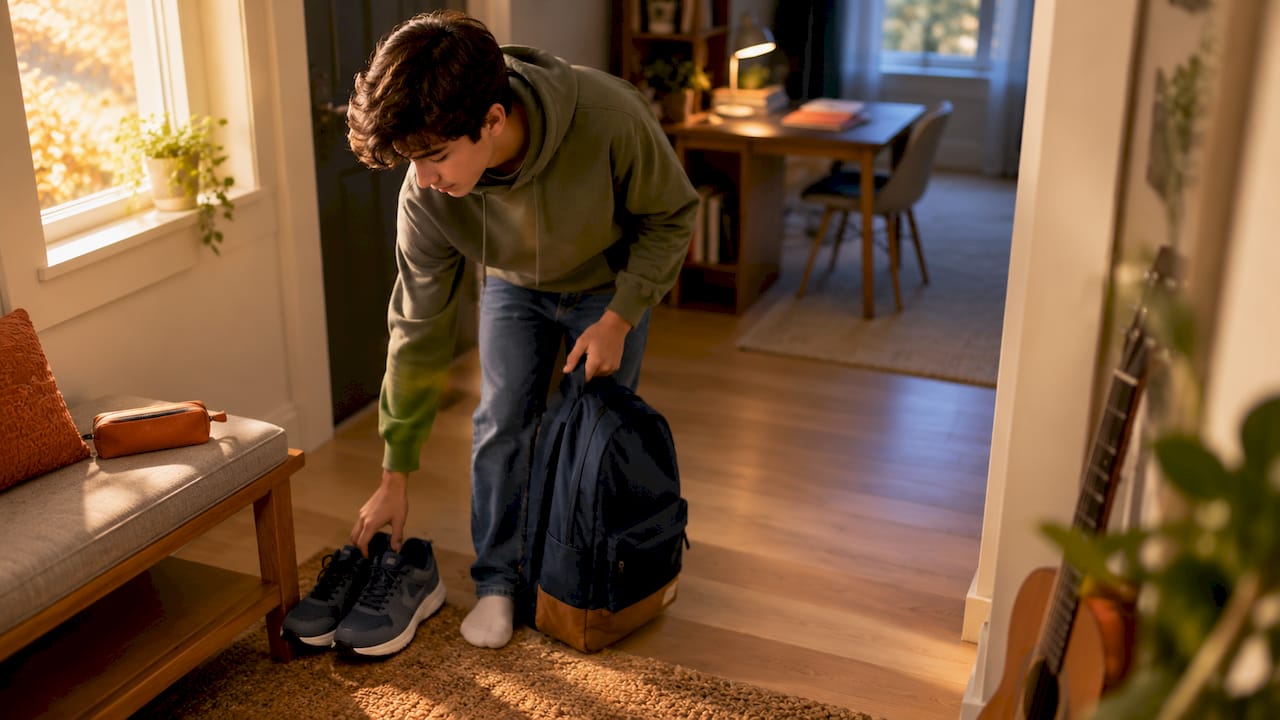
- Prepare your bag and plan for the next day the night before, never in the morning.
Pro tip: Display the weekly schedule on the fridge. A child who can visually see their week is better able to anticipate the workload ahead and negotiates less at the last minute.
This protocol doesn't require a complete overhaul of the family's routine. Often, simply shifting one time-consuming activity or setting a fixed bedtime is enough to see a real change in one to two weeks.
Should we continue or discontinue an activity? The decision grid
Deciding to stop an activity is rarely easy, especially when the child is determined to continue despite being tired. A set of objective questions can help to move beyond the emotional aspect.
- Is the pleasure still present?Or has the activity become a constraint?
- Is there any real progress? in the targeted skills, or stagnation for several months?
- Is the cost in terms of transport time and money proportionate? to what benefit was felt?
- Is the educational impact measurable? (grades, undone homework, fatigue in class)?
Rather than making a rash decision, set a trial period of four to six weeks with targeted adjustments (less frequent meetings, or a single quarter instead of a full year). Schedule a short weekly meeting to review the situation together. Present the decision as a temporary and reversible choice rather than a failure; this significantly reduces feelings of guilt for both parties.
Adaptable timetable templates, from primary to secondary school
The right model depends mainly on age and time of year.
| Level | Activities per week | Daily study | feature |
|---|---|---|---|
| Primary | 1 after-school activity | 30 minutes of short homework | Quiet time or a siesta is preserved in the afternoon. |
| Secondary (excluding exams) | Maximum 2 activities | Study sessions spread over 3 to 4 evenings | A relaxed weekend for recovery |
| Secondary (exam period) | One activity maintained, the other temporarily suspended | Gradual increase in study time | Back to normal after the exams |
During exam weeks, it's better to suspend one activity rather than maintain everything while reducing sleep. structured revision plan Spending a few days is often enough to bridge the gap without sacrificing leisure time for the entire term.
What to do if your child is already overweight
If several signs from the checklist are already present, act in stages rather than changing everything at once.
- Recognize The situation should be addressed without dramatizing or blaming the child.
- Prioritize only one activity to keep, the one that brings the most real pleasure.
- Lighten up immediately load the load while temporarily suspending the rest.
- Replace an activity through active rest (walking, free play) rather than through more study.
- Watch monitor the situation for two to three weeks before reintroducing anything.
If academic delays have accumulated during the overload period, a targeted catch-up plan over a few days This often allows you to bridge the gap without adding extra activities. If fatigue persists, anxiety increases, or rest is no longer enough to restore balance, consult a youth mental health professional or the school's educational advisor: local support resources exist specifically for these situations.
Concrete resources to regain balance
After more than 25 years of supporting Quebec families, the Réussite A+ team has seen this pattern repeat itself: it's not more activities that help a struggling child, it's targeted support. Rather than adding hours of homework to an already full week, a routine homework workshop 45-minute sessions or personalized tutoring often make it possible to recover lost time without sacrificing sport or music.
Putting pleasure and recovery back at the center
The distinction between harmonious and obsessive passion is more than just an academic nuance. It reminds us that a child who progresses without enjoyment or rest will eventually burn out, regardless of their talent. Value variety, protect sleep, and allow room for boredom: that's often where true passions are born.
Need for a targeted boost rather than just another activity
Unlike a general private lesson that simply adds an extra hour to the schedule, it is possible to find support tailored to your child's real needs, without long-term commitment and without hidden subscriptions.

If homework time turns into a conflict, the 45-minute homework routine workshop is often enough to defuse the tension. If your child is approaching a high school entrance exam or an assessment period, the preparation for school exams It precisely targets the gaps in knowledge rather than starting from scratch. Each session is billed by the hour, with no set package: see the details. rates to find the formula that suits your situation, and book your first slot this week.
Sources
- The role of passion for an extracurricular activity in school functioning at the end of secondary school — UQAM (Gendron et al., 2024)
- Benefits of Extracurricular Activities — Wilson Online
- Balancing your life — CMHA Toronto
F.A.Q
How many extracurricular activities per week is reasonable?
In elementary school, a single after-school activity is usually sufficient to allow time for free play and rest. In secondary school, a maximum of two activities allows for a distributed study time without encroaching on sleep.
How can I tell if my child is overworked rather than simply tired?
Temporary fatigue dissipates after a good night's sleep or a quiet weekend, whereas overload is accompanied by a drop in grades, persistent irritability, and a loss of enjoyment in activities previously enjoyed. A two-week tracking journal helps distinguish between the two situations.
Should you stop an activity at the first signs of fatigue?
Not necessarily. A trial period of four to six weeks with a reduced workload (less frequency, a single season) often allows one to restore balance without completely giving up the activity.
Does Réussite A+ offer support for students with an increased workload?
Yes, the A+ Success routine homework workshop and personalized tutoring specifically target the gaps accumulated during a period of overload, at a rate of $30 to $35 per hour depending on the service chosen.
Can an obsessive passion for a sport or instrument negatively impact one's grades?
Yes, a study from UQAM shows that obsessive passion, unlike harmonious passion, is associated with a decline in academic performance and more amotivation among high school students.